Over the past decade or so, the automotive industry has undergone a significant transformation in the refrigerants used in air conditioning (A/C) systems. These changes are primarily driven by European Union environmental regulations (F-Gas Regulation) and global efforts to reduce greenhouse gas emissions.
For workshops, this means investing in new air conditioning service stations, training staff, and adapting service procedures. For many years, R134a (HFC-134a) was the standard refrigerant in automotive air conditioning systems. It was characterized by good cooling efficiency, chemical stability, and relatively easy maintenance. However, its disadvantage is its high GWP (Global Warming Potential) – approximately 1430.
In response to new regulations, from 2017 all new type-approved passenger cars in the EU must use a refrigerant with a GWP below 150. R1234yf (HFO-1234yf) has become the standard, with a GWP of around 4. This is a huge change from an ecological point of view – but also a challenge for workshops.
In the case of trucks, the change will be noticeable in vehicles manufactured after 2024.
Although the new R1234yf refrigerant operates at similar pressures to R134a, it cannot be serviced at the same service station. There are three reasons:
For workshops, this meant purchasing a separate R1234yf station or a dual-gas model. The price difference between a traditional R134a station and an R1234yf unit was initially significant, but the market has now stabilized.
As a curiosity, you can mention R744, or simply carbon dioxide (CO₂), has a GWP of 1, making it virtually climate-neutral. It's already used by manufacturers such as Mercedes-Benz and Volkswagen in select models. However, CO₂ systems operate at significantly higher pressures (even above 150 bar), requiring entirely different service stations, piping, and safety procedures. For garages, this means another wave of investment – although for now, R744 is primarily used in newer, higher-end vehicle segments.
Assuming the purchase of a Syberia Serie 8 air conditioning service station at a price of PLN 8,500 net, it is worth analyzing the real return on investment at typical market rates.
Assumptions:
This means that the station pays for itself after approximately 38 full air conditioning services .
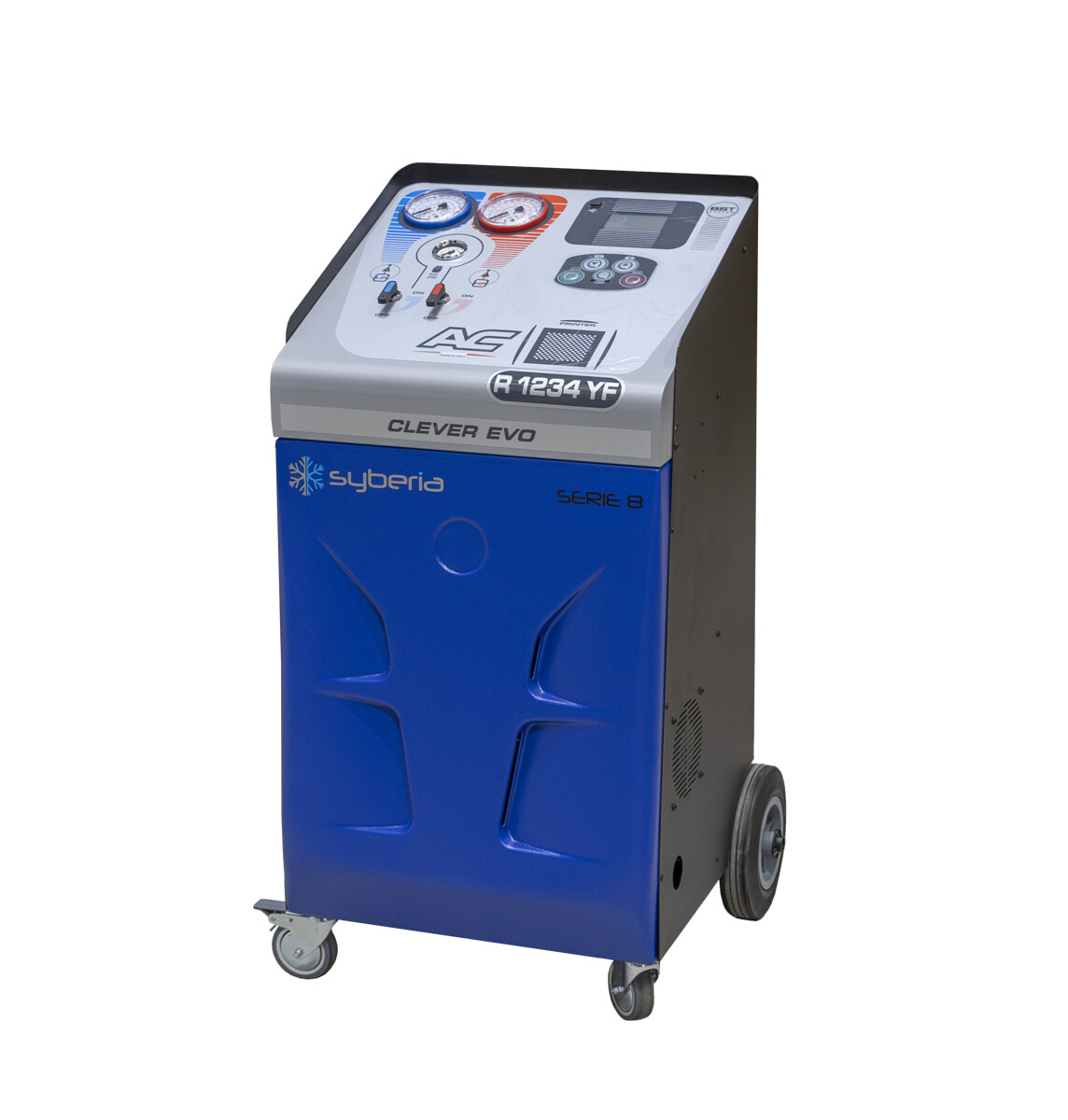
Assuming the purchase of a Syberia Serie 8 air conditioning service station for PLN 8,500 net, it's worth analyzing the real return on investment at typical market rates.
Of course, you may have doubts about the knowledge of your mechanics or wonder how to obtain F-gas certifications. Autos addresses these concerns by providing comprehensive solutions. We not only provide equipment, but also train your employees and help them obtain the required certifications.
Already have a station using the old refrigerant? Refrigerant changes require investment, but they also create a real business opportunity. A properly selected air conditioning station – like the Syberia Serie 8 HFO – can not only meet the market's technical requirements but also become one of the most profitable units in your workshop.
Karol Filarski
Workshop Equipment Department