Modern diesel vehicles are equipped with a DPF (Diesel Particulate Filter), which captures and retains soot generated during combustion. This solution significantly reduces harmful particulate emissions into the atmosphere, but in practice, DPFs are one of the most common sources of problems in passenger cars and trucks. For this reason , professional DPF cleaning is becoming an increasingly sought-after workshop service , which, at a relatively low cost, can generate a very attractive margin.
A DPF filter works by collecting soot particles in a ceramic structure. Under ideal conditions, the soot is periodically burned off during a process called regeneration, which occurs at a sufficiently high exhaust gas temperature. Unfortunately, in practice, many vehicles are used in distribution or city traffic, covering only short distances where exhaust gas temperatures are too low for this process to function properly.
As a result, the filter gradually becomes clogged, which leads to a number of problems:
In the case of trucks, these consequences are even more costly, as vehicle downtime means real losses for the transport company.
A new DPF filter is a very expensive item. The cost can often range from a few thousand to even several dozen thousand złoty. For this reason, more and more drivers and transport companies are opting for professional filter cleaning every 100,000 km, which restores its technical efficiency at a significantly lower cost.
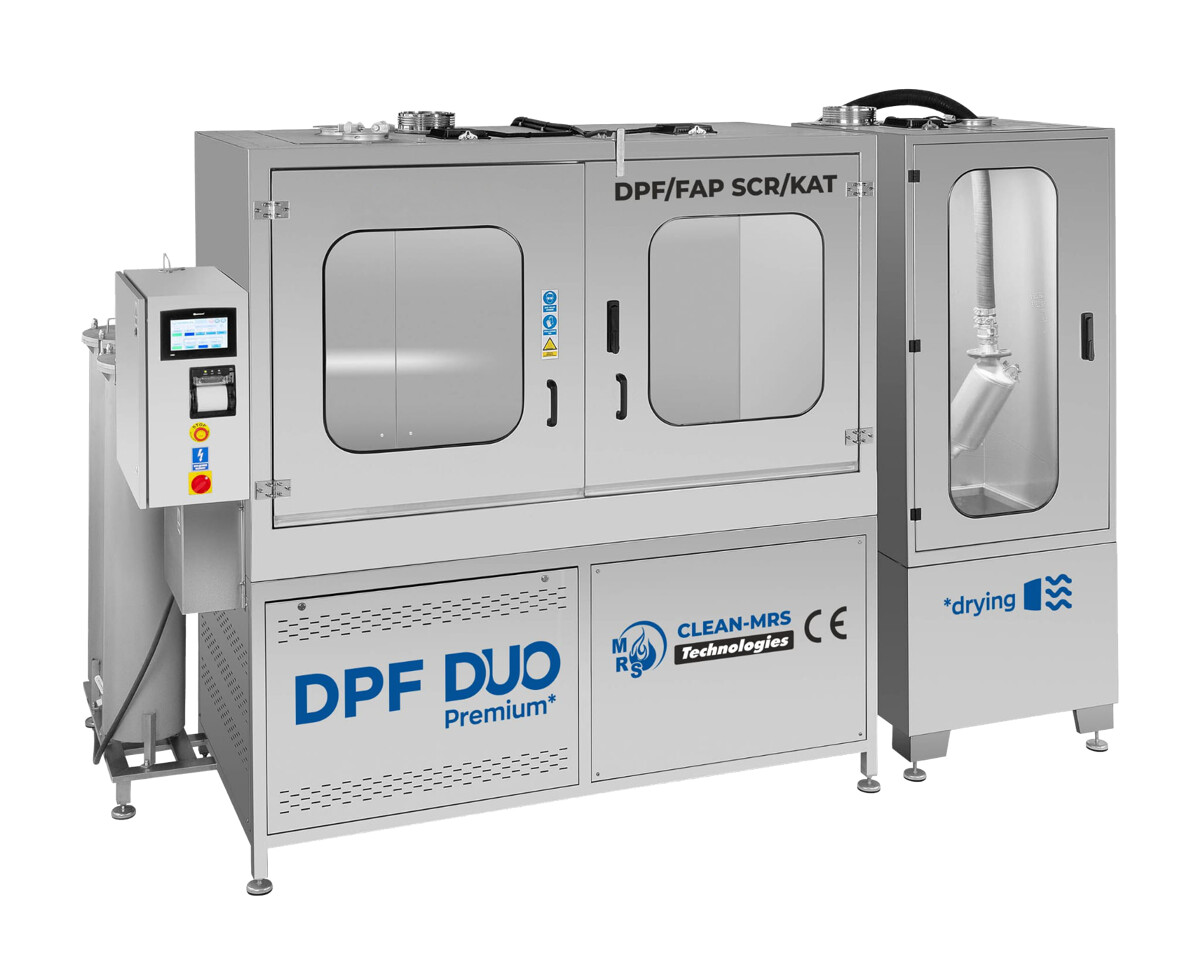
However, the key is to use the right cleaning technology. The best results are achieved using professional DPF filter washers equipped with dedicated adapters for passenger cars and trucks . These devices allow for thorough filter rinsing, removing both soot and ash trapped in the ceramic insert. Most importantly, using an appropriately sized heater, the filter can be dried and "heated" after service.
The process of servicing the DPF filter in a professional washer usually takes place in several stages:
The advantage of this technology is its high efficiency and safety for the filter element. Unlike other methods, there is no overheating of the ceramic structure or its "sludging" resulting from inefficient drying.
One of the biggest advantages of cleaning DPF filters using a professional washer is the very low material cost of a single service. In practice, this comes down primarily to water consumption, a small amount of detergent, and electricity. This means that the actual cost of a single cleaning operation is relatively small compared to the price of the service offered to the customer, ranging from PLN 45 to PLN 65 net per filter, depending on the region.
This allows the workshop to offer the service at an attractive price for the driver while maintaining high profitability.
Investing in a professional DPF filter washer, such as the Duo Premium (A: 0347482), often pays for itself in a relatively short time. This is due to several factors:
In practice, this means that a service valued by the market at PLN 700-1,000 generates a significant margin , and with an appropriate number of customers, the device can pay for itself within a dozen or so months.
Adding professional DPF cleaning to your workshop's offerings is not only an additional source of income but also a way to attract new customers. Drivers who report a clogged filter problem often opt for other servicing, such as engine diagnostics, oil changes, or exhaust system inspections.
Thanks to this, DPF cleaning can become an important element of workshop development and increasing its competitiveness on the market.
DPF filters are an essential component of modern diesel vehicles, but their operation is often associated with clogging problems. Professional cleaning using a specialized washer with adapters for passenger cars and trucks effectively restores the filter's efficiency, providing an attractive alternative to costly replacement.
For car repair shops, this is a service with very low material costs and a high rate of return , which can quickly become one of the most profitable elements of the service offer.